 Oculista Bolzano
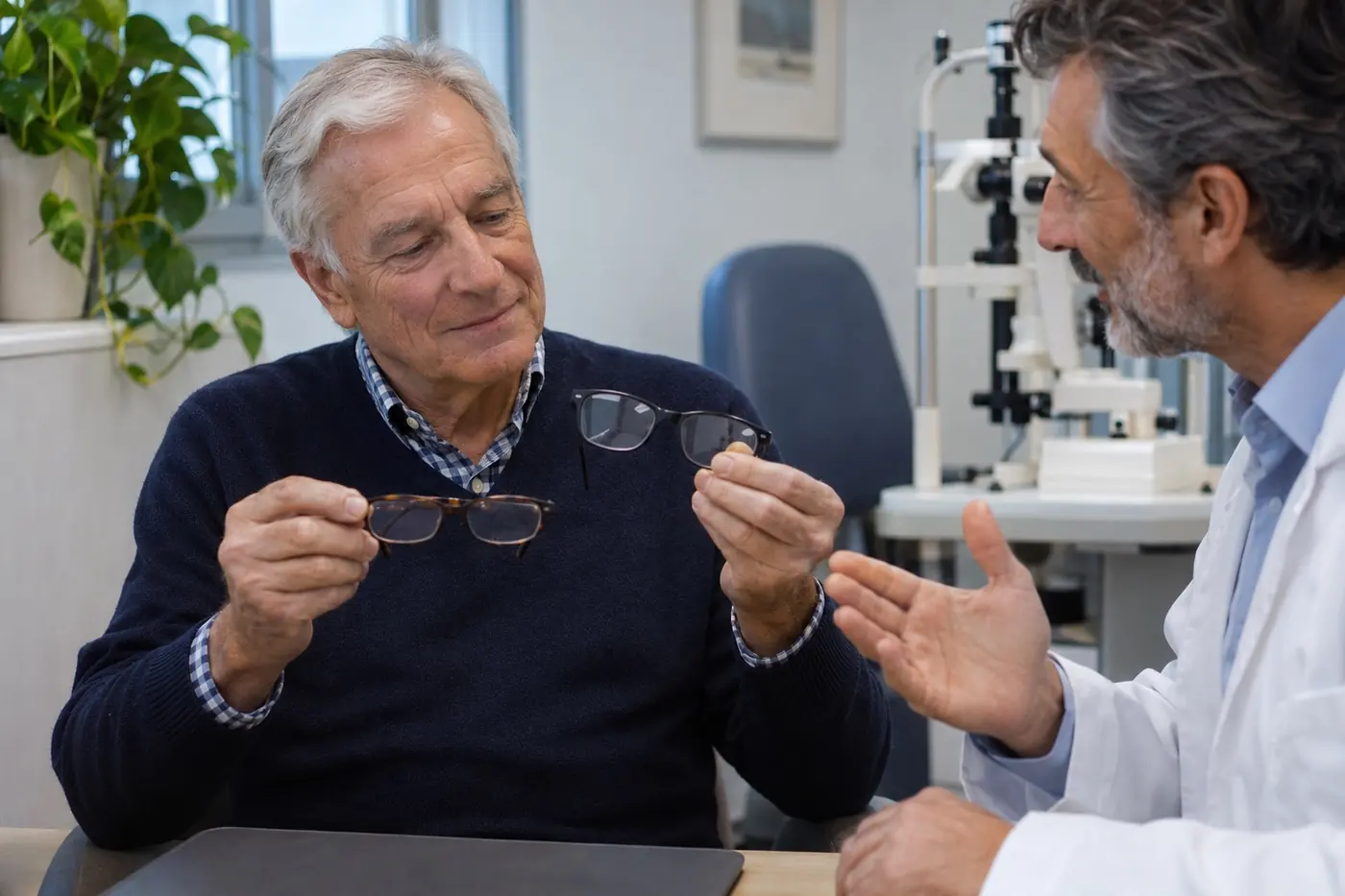
When to consider surgery
A cataract is clouding of the eye’s natural lens. It may make reading, recognising faces, seeing contrast or driving in low light harder. It usually develops gradually. Sudden loss of vision should therefore not be assumed to be cataract and needs prompt assessment.
There is no single visual-acuity threshold that determines when everyone should have surgery. Daily limitations, eye health and personal preferences all matter. Updated glasses and better lighting may help initially. Surgery is discussed when its expected benefit justifies the risks.
Before your appointment, note specific difficulties: reading a phone, sewing, computer work or night driving. These examples help define a realistic goal.
Monofocal, multifocal, EDOF and toric lenses
A monofocal lens targets one main distance, often distance vision. Reading glasses are usually needed, and glasses may still help with other tasks. Monovision targets different distances in the two eyes and requires a separate discussion about tolerance.
Multifocal lenses distribute light across several distances and may reduce dependence on glasses. Trade-offs can include halos, glare and changes in contrast, particularly at night. EDOF lenses extend the range of focus, often supporting distance and intermediate vision. Small print may still require glasses; individual designs differ.
A toric lens corrects regular corneal astigmatism. This feature can be combined with different optical designs; it does not automatically mean multifocal. No lens is best for everyone or guarantees freedom from glasses.
The operation, recovery and warning signs
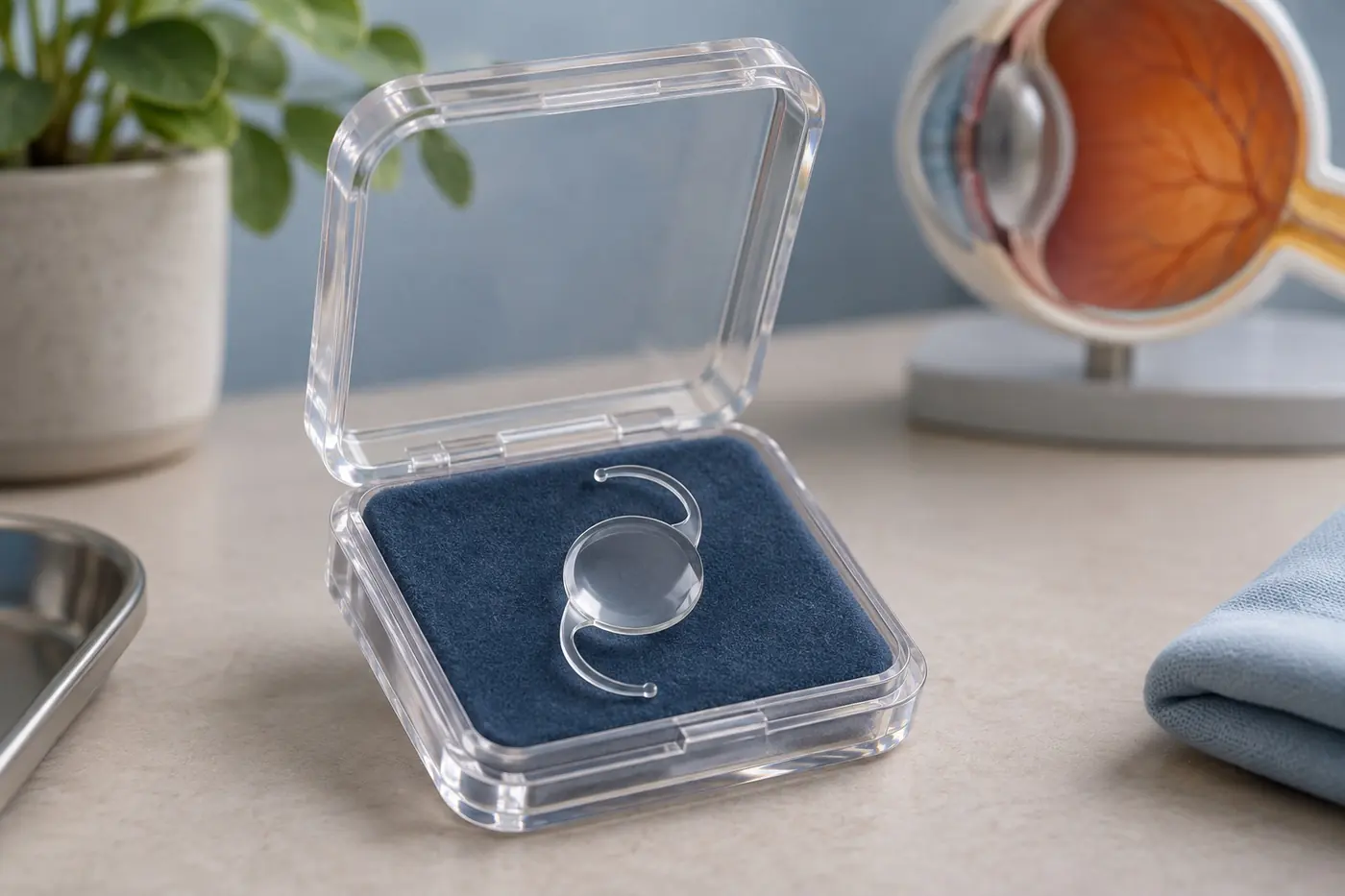
The cloudy lens is removed and replaced with an intraocular lens. Local anaesthesia, often using drops, is usual. Report pain during surgery rather than silently putting up with it. The approach to one or both eyes is agreed individually.
Vision can fluctuate and mild discomfort may occur initially. Recovery also depends on the cornea, retina and other conditions. Follow your own instructions for drops, appointments and temporary restrictions.
Possible complications include infection, inflammation, macular swelling, pressure changes, retinal problems and a remaining prescription. Severe pain, worsening vision, increasing redness, new flashes or shadows require urgent advice from the surgical team or an emergency department.
Checks before choosing a lens
The examination establishes whether cataract explains the symptoms and whether other conditions may limit the result. Glaucoma, macular disease, corneal changes and dry eye can affect lens selection. Biometry provides measurements for lens calculation. An unstable eye surface may need treatment before final measurements.
Mention previous laser vision correction, injuries, contact lenses and all medicines. Do not stop medication yourself. Bring your usual glasses and available records.
At a consultation in Bolzano, ask which distance is being prioritised, when glasses are likely to remain necessary and which limitations relate to your eye health. These answers matter more than a lens brand name.
Sources · NICE — Cataracts in adults: management
All sources and further reading (1)
Illustrative images from the website’s image library.
- AI-generated illustrative image
- AI-generated illustrative image