 Oculista Bolzano
Start rinsing before looking up information
- Start immediately with plenty of clean water at a comfortable temperature: tap, shower or bottled water, whichever is available. Use a gentle flow.
- Keep the eyelids open as well as you can without pressing on the eye. If only one eye is affected, tilt your head towards that side to avoid washing chemical into the other eye.
- For corrosive, concentrated, strong or unknown products, continue for at least 20 minutes. Have someone call for help while you rinse; do not wait until irrigation is finished.
- If you wear contact lenses, start rinsing anyway. Remove them during irrigation as soon as this is easy, without delaying or unnecessarily interrupting the rinse.
Do not wait to find saline or read the label. Immediately reducing the product’s contact time is the priority.
When to go to the emergency department
A strong or unknown product, blurred vision, significant pain or inability to open the eye requires immediate assessment. Call 112 if the injury seems severe or emergency transport is needed. Do not drive. Mention skin exposure and inhaled fumes too. If possible, have someone call or use speakerphone while safely continuing to rinse.
A poison information centre can advise about a product, but the call must not interrupt irrigation or delay emergency care in a serious case. If mild soap was involved and symptoms rapidly settle after rinsing, seek advice if uncertain about the substance. Persistent redness, pain, photophobia or altered vision needs examination.
What not to put in the eye
Do not use vinegar, bicarbonate, milk or other substances to neutralise the chemical. Random eye drops are not substitutes for irrigation. Do not rub or press on the eye, wipe the cornea with a tissue or remove adherent material with an instrument. Continue rinsing and follow healthcare instructions.
If powder or granules were involved, say that the substance was solid and may remain beneath the lids. Do not scrape. Hospital staff can examine the inner eyelid folds, called fornices, and remove retained material when needed. Keep helpers from contact with concentrated product or contaminated runoff.
Product name, concentration and UFI code
Report the product, whether concentrated or diluted, when exposure occurred and when rinsing began. If packaging is safely accessible, have someone bring the name or a label photograph. A UFI code may help identify the formulation. Knowing whether it was a household surface cleaner or industrial product also helps the initial assessment.
Say whether both eyes were exposed, whether you wore glasses or contact lenses and whether lenses have been removed. Do not spend time calculating the exact amount: “a direct splash” is useful. Report any visual change even if it is difficult to assess while rinsing.
How the eye is checked after irrigation
Staff may check pH, a measure of acidity or alkalinity at the surface, and continue irrigation. Once exposure has been addressed, they assess vision, cornea and conjunctiva, sometimes using dye to show damage. Findings guide treatment and follow-up. Pain may not accurately reflect injury severity, especially with certain products.
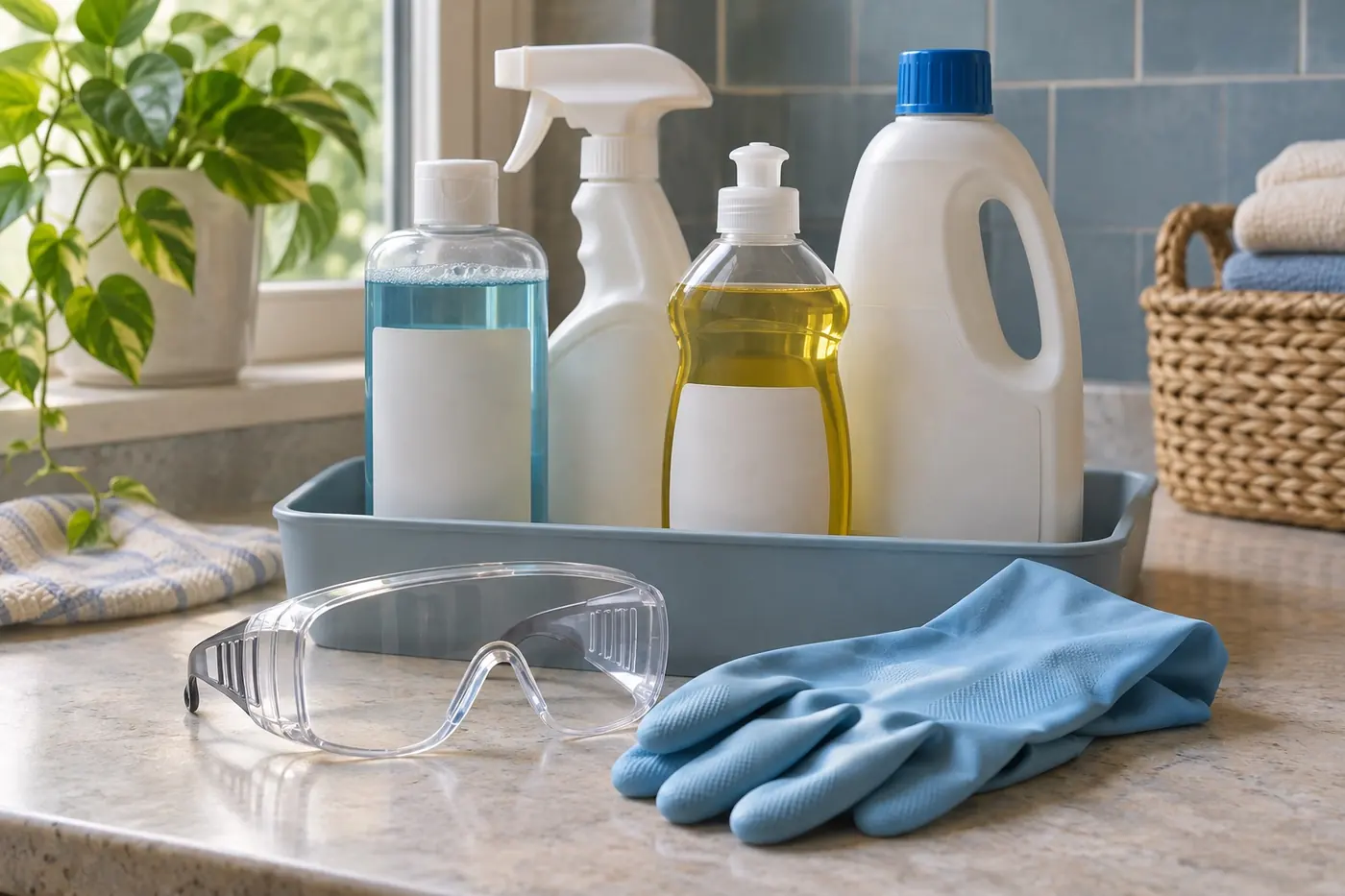
Follow instructions precisely for drops, lenses and review. Report worsening pain, redness or vision immediately. Prevent further exposure with suitable protection and original labelled containers. Protection matters while diluting or pouring products as well as while using them.
Children and exposure of both eyes
For a child, begin rinsing as soon as you can bring them safely to water. If two adults are present, one can help keep the eyelids open without pressure while the other calls and identifies the product. If the child will not cooperate or effective rinsing is difficult, call for assistance and continue as best you can following instructions. Do not postpone the call until irrigation is perfect.
If both eyes are exposed, water must reach both. Avoid contaminated runoff reaching other areas of the face or helpers. Mention skin involvement and any breathing difficulty after fumes. A strong or unknown substance must not be considered harmless simply because pain is limited.
Twenty minutes does not mean the eye has healed
Initial irrigation reduces the amount of chemical in contact with the eye. Twenty minutes is a first-aid instruction, not evidence that the surface is normal. Hospital irrigation may continue according to the product and pH. Staff may recheck pH after a pause to detect changes from retained material.
Some alkalis can penetrate tissues; acids can also cause serious injury. Do not judge severity by a generic name such as “cleaner” or by pain. Composition, concentration, amount and contact time all matter. Pain may be out of proportion to the damage in either direction.
After rinsing, the clinician assesses the surface and tissues around the cornea that support healing. These findings determine treatment and monitoring. Tell the team if prolonged rinsing has helped, but do not substitute improvement for assessment after a corrosive or unknown exposure.
Sources · NHS – Eye injuries · NHS Highland · Acute ocular chemical injury guideline
All sources and further reading (6)
- Centro Antiveleni di Milano · Caustici
- Centro Antiveleni di Milano · Contatti
- Protezione civile – Numero unico di emergenza 112
- European Chemicals Agency · UFI on chemical products
Illustrative images from the website’s image library.
- AI-generated illustrative image
- AI-generated illustrative image