 Oculista Bolzano
Signs that should not wait
Go to the emergency department if vision is worse, you see double, blood is visible in front of the iris or eye movement is abnormal. The same applies to severe pain, an altered pupil, a new shadow, many dots, a wound or a high-speed impact. Call 112 for severe trauma, major visual loss, confusion, vomiting after a significant head injury or a need for emergency assistance.
Do not press on the eye to open a swollen lid. Do not remove an embedded object or drive with altered vision. Even with an apparently mild impact and only superficial bruising, seek advice if the eyeball was struck directly, the eye has undergone surgery or you cannot confidently assess vision.
Why the mechanism matters
A large ball may mainly strike the bones around the eye, while a smaller object can hit the eyeball directly. An elbow can also injure the head and orbit. Describe what struck you, the distance and whether the eye was open, if known. Mention broken glasses and previous eye surgery.
For a clearly superficial mild bruise without warning signs, a cool cloth around the eye may soothe it. Avoid ice directly on skin and any pressure on the eyeball. Reduced swelling does not prove the internal structures are unharmed. Seek assessment for visual change or unusual pain.
Hyphaema: blood inside the eye
A small superficial bleed may appear on the white of the eye. After impact, blood can also collect between the cornea and iris; this is called a hyphaema. It may reduce vision, form a visible level below the pupil or be too subtle to see in a mirror. When safe, the clinician also checks pressure and assesses the risk of further bleeding.
Tell staff about anticoagulants and antiplatelet medicines. Do not stop them yourself and ask before taking additional medicines after injury. Do not try to identify the source of bleeding by colour alone. Report visible blood, visual changes and the time of impact.

Flashes, a curtain or double vision after injury
New flashes or floaters after trauma may require a retinal examination. A curtain or narrowing visual field needs immediate help. Symptoms from the back of the eye can sometimes appear days later. Even after an initially intact retinal examination, follow the review plan and report changes.
New double vision may also require assessment of the orbit and eye movements. Describe whether it is worse looking up or sideways, whether movement is difficult and whether you feel dizzy. Do not repeatedly provoke painful movements as a test. Visual change with confusion, weakness or other symptoms after a head injury requires immediate emergency assistance.
What is checked and what to watch for at home
Examination may include vision, pupils, eye movements, cornea and retina. The order depends on the suspected injury. A possible deep wound or orbital problem may require further tests. Bring information about the impact and regular medicines. Afterwards, ask when sport, contact lenses and usual activities may resume and whether pressure or retinal review is planned.
Seek immediate advice for progressively worse vision, a curtain, flashes, new dots or increasing pain rather than waiting for the booked appointment. Use protection appropriate to your sport or activity. Returning to play while vision or eye movements are altered increases the chance of another accident.
Why retinal and pressure checks may continue later
The first examination addresses immediate questions: is the eye intact, can the retina be seen and is it attached, and is there blood inside? Swelling, cloudiness or bleeding may prevent a complete view, making later reassessment necessary.
Some injuries can lead to a retinal tear or pressure problems later. Hyphaema can require close review for pressure and renewed bleeding. In selected cases, longer-term checks are planned because damage to fluid drainage can have consequences after the bruise resolves.
Ask what should be rechecked and when. A retinal examination and a pressure check answer different questions. Share the plan if another service takes over. A curtain, flashes, many floaters or worsening vision should not wait for the planned date.
Sports injuries and broken glasses
Report whether the impact happened while running and whether you also struck the ground. Broken glasses raise the possibility of fragments as well as bruising. Do not retrieve a broken lens if this involves pressing on the lid or touching the eye. Continue to avoid manipulating a wound or embedded object.
Do not force open the eyelids of a child who refuses to open an eye after impact. Explain difficulty following an object, nausea or unusual sleepiness. A head injury may need assessment beyond ophthalmology. Seek immediate help for significant symptoms or if you cannot judge the severity.
Sources · NHS – Eye injuries · AAO · Recognizing and treating eye injuries
All sources and further reading (10)
- AAO · Hyphema
- National Eye Institute – Retinal detachment
- AAO · Subconjunctival hemorrhage
- AAO · Different kinds of eye bleeding
- AAO – Preferred Practice Pattern, 2025
- NHS · Double vision
- AAO · Managing hyphema: treatment and follow-up
- Moorfields Eye Hospital – Corneal foreign body
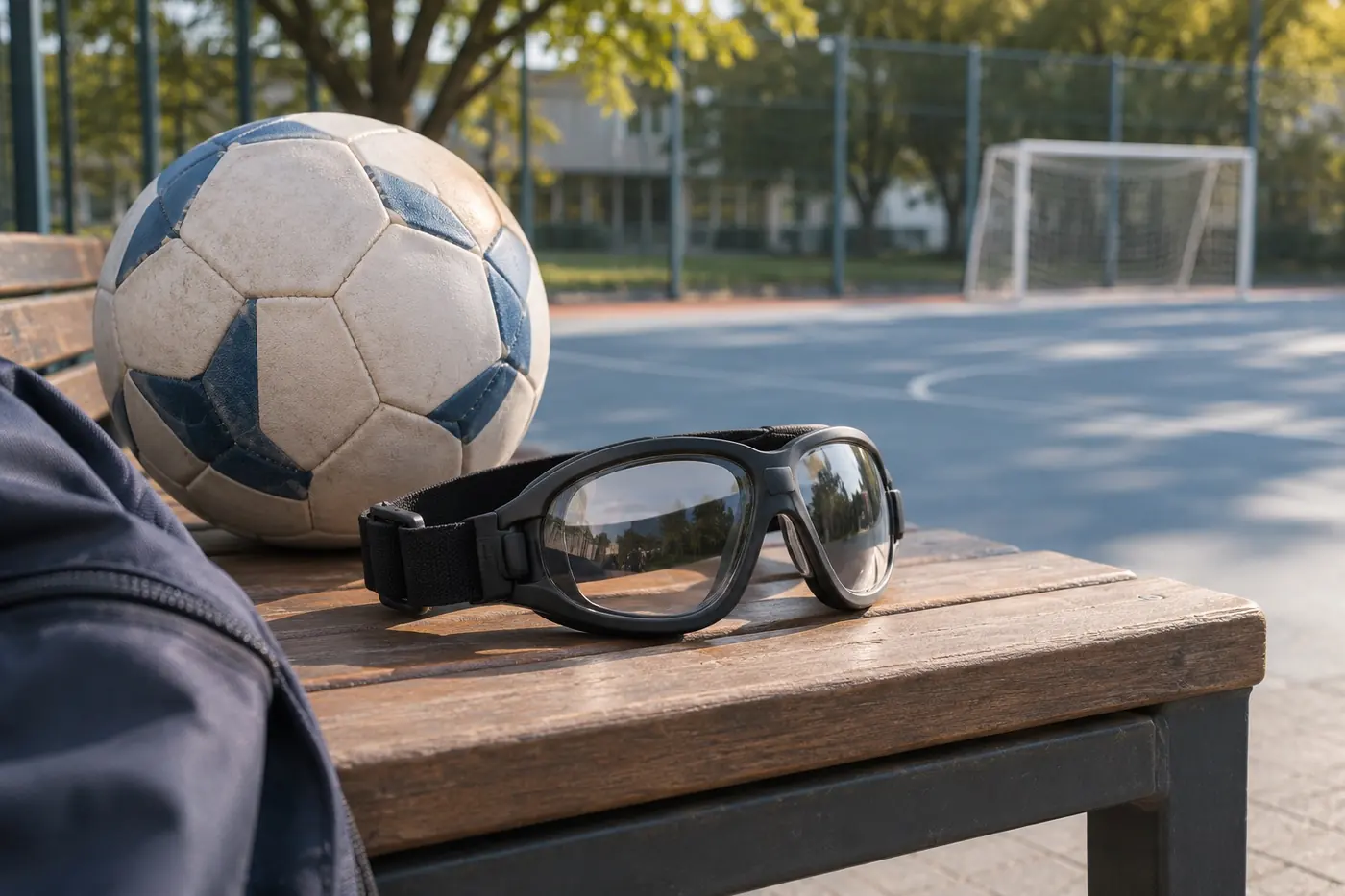
Illustrative images from the website’s image library.
- AI-generated illustrative image
- AI-generated illustrative image