 Oculista Bolzano

When to arrange an examination
Arrange a paediatric eye examination if your child often closes the same eye outdoors or an eye drifts outwards. Eyes appearing aligned indoors does not exclude an intermittent problem. Explain how long it has happened, how frequently and whether there are difficulties at school, in sport or recognising distant objects.
Sudden eye deviation or new double vision needs urgent assessment. Use emergency services after severe trauma or with severe headache, vomiting and marked illness, weakness or other neurological signs. Report a white pupil reflex seen directly or in a suspicious photograph immediately. Do not wait until you can reproduce it.
Why an eye may drift outwards intermittently
For coordinated vision, the eyes point towards the same object. In intermittent exotropia, an eye turns outwards at certain times, sometimes more noticeably when looking far away, tired or distracted. The eyes may then realign. Some children close one eye in bright light. That behaviour alone is not diagnostic because other problems can also make sunlight uncomfortable.
A child may not complain of double vision: the brain can give less weight to the image from the deviating eye. Examination therefore measures each eye’s vision and how they work together. A consistent preference for one eye or different prescriptions between eyes may need attention during visual development.
Useful observations without turning home into a testing room
Note whether it happens in sunshine, when tired, looking far away or doing close work. Say whether it is always the same eye, whether it straightens when your child looks at you and whether frequency is changing. A brief natural video may capture what does not occur during the appointment. Do not deliberately use dazzling light or repeatedly perform cover tests.
If a photograph shows an unusual white reflex on one side, show it when requesting assessment rather than taking many more pictures first. Angle and flash can affect photographs, but a suspicious white reflex needs checking. Also mention a child keeping an eye closed because light hurts, particularly with redness or watering.
What the examination checks and why drops may be used
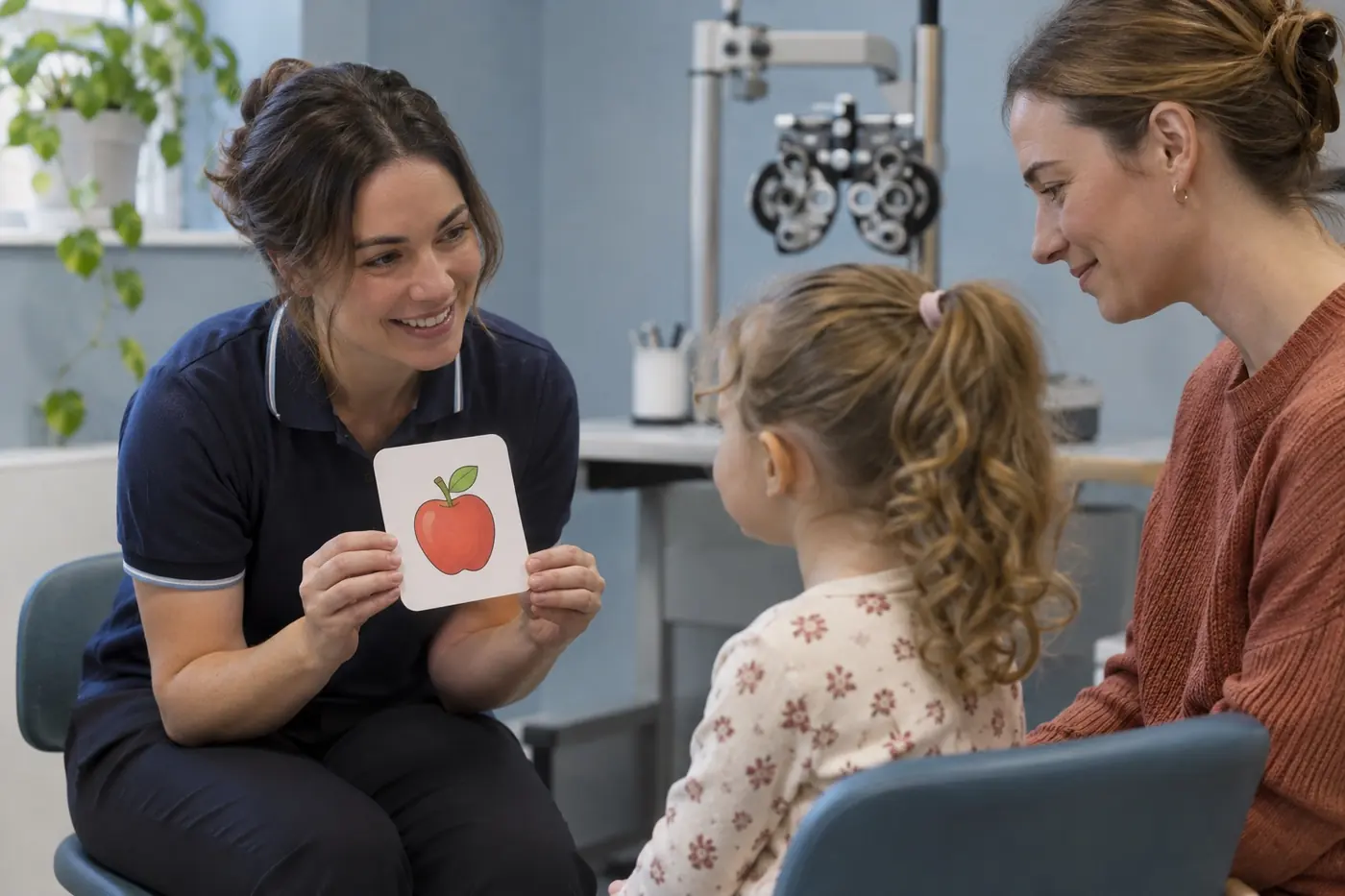
Age-appropriate tests assess each eye’s vision, movements, alignment at different distances and coordination. Depth perception may be tested when suitable. An orthoptist may help with measurements. Drops can relax focusing to measure refractive error accurately and allow examination of the back of the eye when indicated.
Bring glasses and previous reports. Mention a family history of squint or amblyopia and whether your child complains of tired eyes, moves close to objects or turns their head. A clear description or short video can guide follow-up even if no deviation appears that day.
Observation or treatment?
The plan depends on frequency, ability to realign, each eye’s vision and symptoms. Selected children can be monitored. A PEDIG randomised trial in children with intermittent exotropia found short-term deterioration uncommon with both observation and part-time patching. This does not mean observation is appropriate in every case.
Findings may lead to glasses, amblyopia treatment or, in selected cases, other approaches including surgery. Do not start patching or eye exercises without instructions. Ask which changes should prompt earlier review, such as much more frequent deviation, new difficulty seeing or double vision. What you observe in daily life complements clinic measurements.
Squint and “lazy eye” are not synonyms
Strabismus, or squint, means the eyes are not always aligned. Amblyopia, often called “lazy eye”, means vision in an eye has not developed as expected. They can coexist, but not every child with a deviating eye has amblyopia, and not all amblyopia is visible from eye position.
The distinction affects treatment. Glasses correct focusing error; patching prescribed for amblyopia encourages use of the weaker-seeing eye. Eye-muscle surgery changes alignment and does not automatically replace treatment of underdeveloped vision. In selected intermittent exotropia cases, patching may have a different aim, so ask why it is recommended for your child.
Do not cover the apparently straight eye without measurements of both eyes. Side and duration must be prescribed and reviewed. If glasses or patches are difficult to tolerate, describe what happens. A workable daily plan needs follow-up to check its effect.
What observation with follow-up means
If observation is chosen, ask about the interval and what will be compared. The clinician may reassess vision, frequency of deviation and binocular function. Seeing deviation on a particular day is not the only measure. Its frequency and duration at home, and any way your child avoids discomfort, also matter.
If glasses are prescribed, report when they are worn and how they are tolerated. Follow correction or patching instructions and clarify doubts with the treating team. Contact them before the scheduled review if vision worsens, deviation becomes much more frequent or a white pupil reflex appears.
Sources · AAPOS · Exotropia · AAO · A stepwise approach to leukocoria
All sources and further reading (7)
- NHS · Double vision
- NHS Scotland · Orbital cellulitis in adults
- PEDIG · Patching compared with observation, 2014
- AAO · Pediatric ophthalmology and strabismus benchmarks, 2025
- AAPOS · Amblyopia
Illustrative images from the website’s image library.
- AI-generated illustrative image
- AI-generated illustrative image