 Oculista Bolzano
When to seek help immediately
If ordinary light forces you to close an eye and you also have reduced vision, redness or pain, seek urgent ophthalmic care or go to the emergency department. Remove ordinary contact lenses if easy and do not reinsert them. After surgery or an eye injection, contact the treating centre. Mention any injury or chemical splash in your first request for help.
Light sensitivity can also occur in general medical emergencies. Call 112 for a sudden severe headache, confusion, new neurological symptoms or fever with neck stiffness. You do not need to test how much light you can tolerate before deciding. Do not drive if vision has changed; explain the change to whoever is helping you.
Glare and pain from light feel different
Glare makes it difficult to see objects around a bright source. For example, a headlight may obscure road details for a few seconds. Photophobia can instead produce actual pain or intense discomfort in ordinary light, such as daylight through a window. People may call either “light sensitivity”, and both can occur together.
Describe what triggers the symptom. Does a lamp hurt your eye or make text difficult to read? Does it happen in a dim room too? Does closing your eyes relieve the pain or does it continue? Do not deliberately shine a light into the eye to test it. Examples of what happens naturally are enough.
Corneal problems and uveitis
The cornea is very sensitive. A scratch or infection may cause painful light sensitivity together with watering, a foreign-body sensation and blurred vision. With established dry eye and mild, familiar symptoms, the tear film may contribute. New pain or redness requires reassessment of the cause.
Uveitis is inflammation involving internal structures of the eye. Pain from light, reduced vision and redness can be clues; floaters may also occur. Examination identifies the affected structures and considers infection and other causes. Treatments are not interchangeable, so avoid reusing steroid or other drops without instructions.
Light, migraine and an unfamiliar episode
During migraine, light and sound may become especially unpleasant. Photophobia is different from a visual aura, which can appear as a pattern or shimmer developing over time. If your episodes have been assessed and follow a familiar sequence, that history is helpful.
Seek assessment if light hurts only one red eye, vision is lost or the headache is very different from usual. A migraine history alone does not explain a painful red eye or sudden visual blackout. Call 112 for facial drooping, weakness or difficulty speaking. Describe the order in which symptoms appeared.
Preparing for assessment
Say when symptoms began, whether one or both eyes are affected and whether there is redness, discharge, headache or altered vision. If you use contact lenses, describe how long you wore them and in what circumstances. Mention ultraviolet lamps, welding, snow exposure, injury or a recent procedure. Even without every detail, the activity preceding symptoms may be informative.
The clinician may assess the ocular surface, pupil response, cornea and internal structures. Examination light is needed to see these structures and may briefly feel uncomfortable; say if you cannot tolerate it. Afterwards, ask which activities you can resume and when worsening light sensitivity or vision should bring the next review forward.
Symptoms starting hours after snow or welding
Strong ultraviolet exposure can injure the corneal surface. Examples include welding without suitable protection, including for bystanders, and intense reflection from snow. Symptoms may start hours later, with watering, grittiness and difficulty opening both eyes. The same setting may also involve fragments or physical injury, so exposure does not settle the diagnosis.
Describe when exposure occurred, what protection you used and whether one or both eyes hurt. Significant pain, altered vision or marked photophobia needs urgent assessment. Report immediately if something struck an eye during work. A mechanical injury on the same day may require a different approach. Avoid rubbing and do not use borrowed anaesthetic eye drops while waiting.
Making light more tolerable while awaiting care
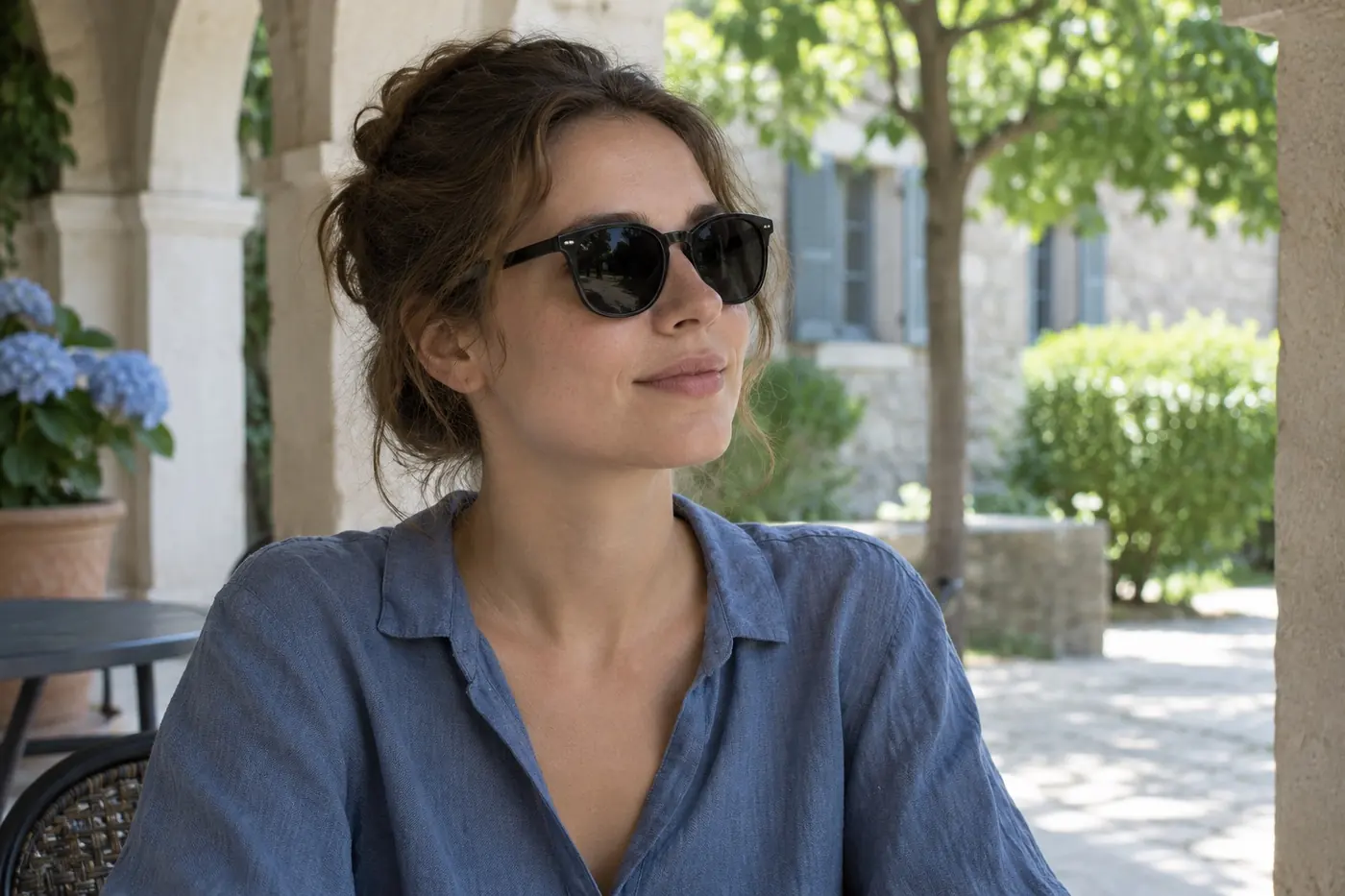
Reduce bothersome light sources and keep enough comfortable lighting to move safely. Sunglasses and a brimmed hat may help outdoors. These measures provide relief; they do not treat a scratch, keratitis or uveitis and must not delay assessment when warning signs are present.
Do not test symptoms by looking at the sun, a torch or a bright lamp. Do not use anaesthetic drops to keep the eye open and continue working. Pause ordinary contact lens wear until the cause is clarified. For a therapeutic lens fitted by a clinician, contact the treating centre directly.
With recurrent, previously assessed photophobia, treatment targets the cause, such as ocular-surface disease or migraine. Bring a practical example of the limitation, such as being unable to read beside a window. This helps assess meaningful improvement instead of repeatedly changing tinted lenses or drops without a clear aim.
Children and people who cannot describe the symptom
A child may keep one eye closed, turn away from a window or stop playing without being able to explain pain. Ask simple questions and observe redness, watering or difficulty recognising objects. Do not shine a torch to check their reaction. Describe what has changed, for example a child who previously played outside comfortably but cannot open an eye today.
Sudden symptoms with severe pain, a red eye, injury or changed vision require urgent assessment. Call 112 if there is also sudden severe headache, confusion, fever with neck stiffness or serious general illness. Mention preceding activities such as swimming, snow sports or play with objects. Tell the team straight away about contact lenses or a recent procedure.
Sources · NHS – Red eye · National Eye Institute · Uveitis
All sources and further reading (15)
- NHS – Eye injuries
- NICE CG150 – Headaches
- CDC – Contact lens-related eye infections
- NHS · Meningitis
- National Eye Institute – Cataracts
- National Eye Institute – Dry eye
- The Princess Alexandra Hospital NHS – Corneal abrasion
- AAO · Bacterial Keratitis Preferred Practice Pattern, 2024
- TFOS DEWS III – Diagnostic Methodology, 2025
- International Headache Society – ICHD-3
- Ministero della Salute – Ictus e TIA
- Royal United Hospitals Bath · Arc eye
- AAO · Pediatric ophthalmology and strabismus benchmarks, 2025
Illustrative images from the website’s image library.
- AI-generated illustrative image
- Athena Sandrini · Pexels License