 Oculista Bolzano
Correcting sight and slowing progression
Myopia makes distant objects look blurred. In children it often increases during growth as the eye lengthens. Glasses correct vision; specific treatments also aim to slow progression. None guarantees that myopia will stop.
High myopia is associated with increased risks of retinal problems and other eye conditions in adulthood. Management should reflect age, progression, eye health and the family’s ability to follow treatment, rather than a single solution for everyone.
Family history and daily habits
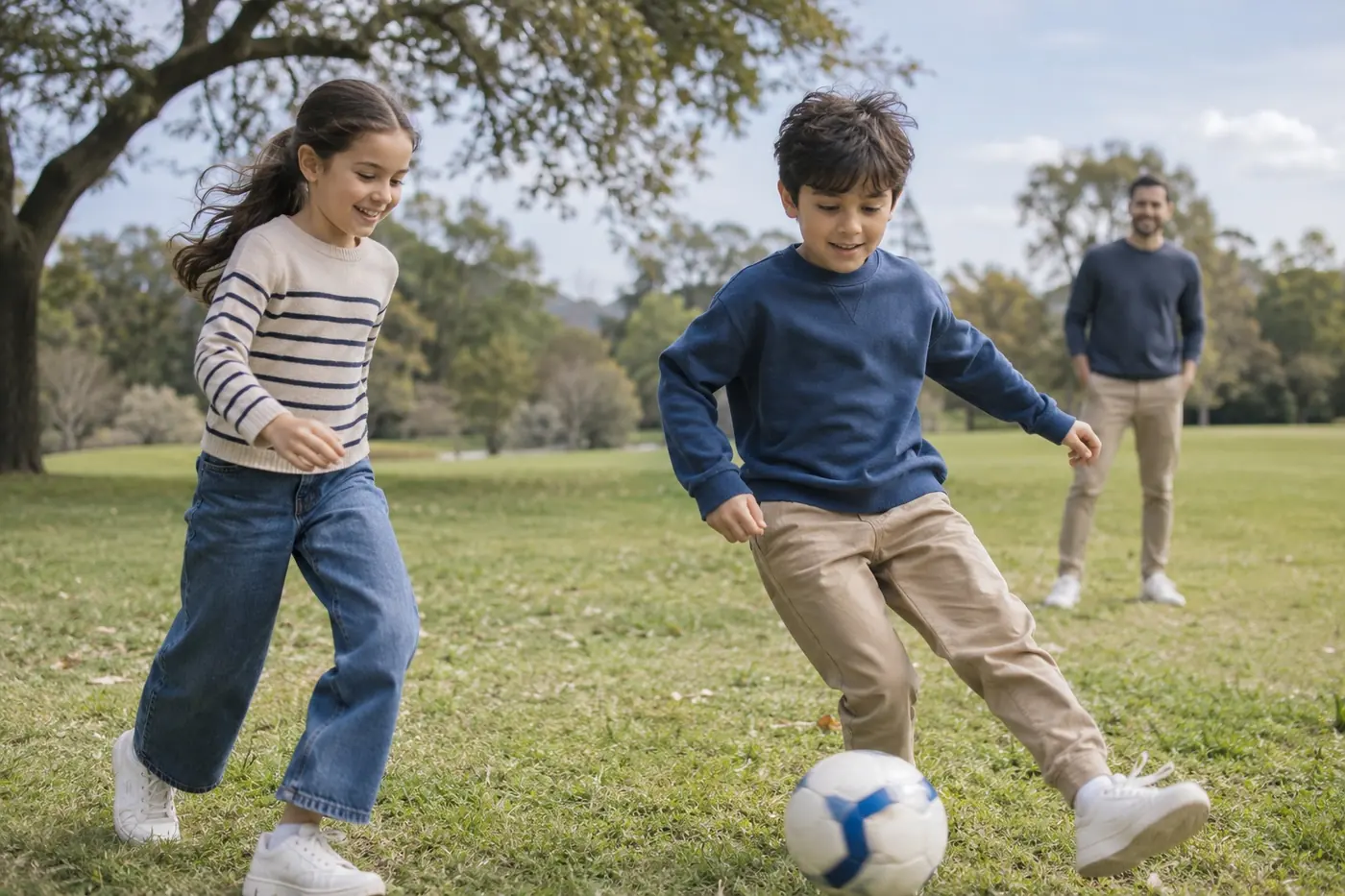
Having myopic parents increases risk but does not determine the outcome. Outdoor time is associated with a lower risk of developing myopia; it does not reverse established myopia.
Outdoor activities, a comfortable reading distance and breaks from close work are reasonable habits. Sun protection remains important: never look directly at the sun. Every activity need not become an eye exercise.
Squinting, difficulty seeing the classroom board or moving very close to objects are reasons for an examination. They do not prove myopia on their own.
Defocus glasses: interpreting the evidence
Some spectacle designs combine clear vision with an optical pattern intended to slow eye growth. An accurate prescription, appropriate frame fit and consistent wear matter.
The two-year DIMS trial published in 2019 studied children aged 8–13 in Hong Kong. Average myopia progression and axial elongation were lower than with single-vision glasses by 52% and 62%, respectively. These are group results from a particular trial, not a guarantee for each child or evidence about every available product.
Follow-up establishes the individual response. Special lenses do not replace examinations or repeat measurements.

Atropine and contact-lens options
Low-concentration atropine may be offered to slow progression. Concentrations and formulations differ in effectiveness and adverse effects. Light sensitivity and difficulty with near work can occur; prescribing arrangements and availability should be discussed with the clinician.
Do not use another person’s drops or change the dose yourself. Response, tolerance, duration and stopping treatment need review. Monitoring may continue after treatment ends.
Selected children may be suitable for specialised contact lenses or orthokeratology. These require reliable hygiene and supervision. Contact lenses carry a risk of corneal infection. Remove the lens and seek prompt assessment for a painful red eye.
Preparing for follow-up
Bring previous prescriptions with their dates and the current glasses. Cycloplegic refraction, when indicated, reduces the effect of focusing effort on the measurement. Axial-length measurements can provide additional information about eye growth.
The assessment also considers vision in each eye, alignment and eye health. Follow-up intervals depend on age, progression and treatment. Ask what improvement is being sought and how it will be measured.
A useful plan in Bolzano should be understandable and manageable for the family. Documented changes over time matter more than one measurement or a commercial promise.
Sources · DIMS spectacle lenses randomized clinical trial · DIMS spectacle lenses full text
All sources and further reading (3)
Illustrative images from the website’s image library.
- AI-generated illustrative image
- AI-generated illustrative image