 Oculista Bolzano
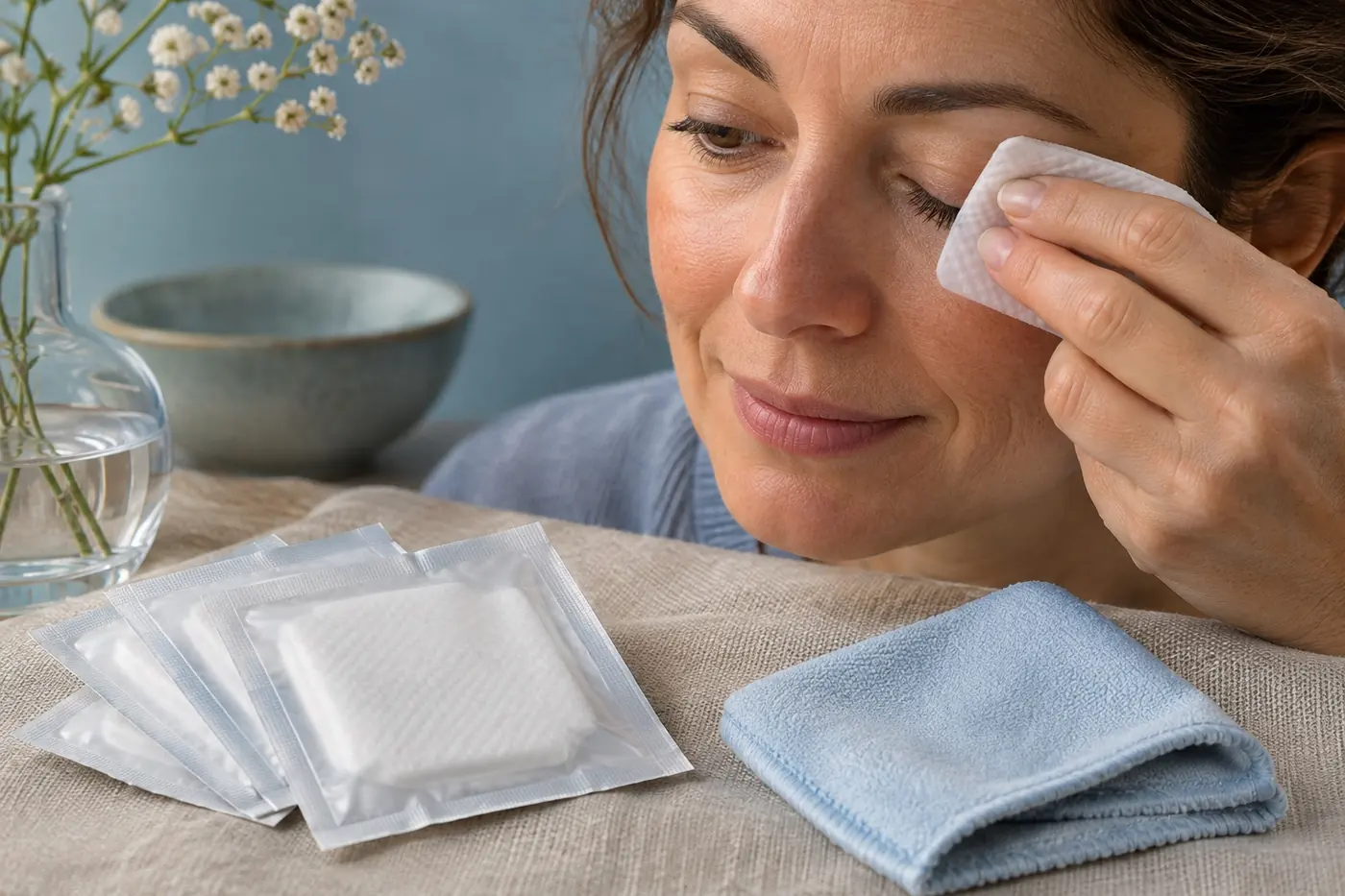
Starting a gentle eyelid-care routine
For recurring morning crusts with mild discomfort, wash your hands and place a clean, comfortably warm, well-wrung cloth over closed eyelids. NHS advice suggests a warm compress for five to ten minutes before cleaning the eyelid margin. Gently remove loosened material using the product or material recommended for you. Avoid rubbing, picking off dry crusts or pressing on the eyeball.
Marked redness, painful light sensitivity, changed vision or pain inside the eye needs urgent assessment. With unusual redness or pain during contact lens use, remove ordinary lenses and seek immediate advice. For mild but frequent symptoms, arrange a review rather than independently increasing cleaning frequency or force.
What becomes inflamed in blepharitis?
Blepharitis means inflammation along the eyelid margins. It may involve the lash roots or the inner edge where the meibomian glands open. These glands produce an oily component that slows tear evaporation. Poor flow can contribute to dryness, burning and blur that varies with each blink.
Scales, crusts or sleeve-like deposits around a lash help the clinician distinguish patterns and possible causes, including Demodex in some cases. A photograph may not show the necessary detail. Mention rosacea, dermatitis or sensitive skin and bring the products used nearby. Do not try essential oils or irritating mixtures as a home treatment for mites.
Crusts at the lash roots or lids stuck together with discharge?
Blepharitis may leave material at the lash bases almost every day, with discomfort along the margin. Conjunctivitis can produce discharge over a few days that sticks the eyelids together, often with more redness of the eye itself. The conditions can overlap. Explain how the episode differs from your usual eyelid appearance.
A localised tender lump is another useful detail and may suggest a stye. A firmer swelling remaining after pain subsides may be a chalazion. Spreading swelling, fever, pain on eye movement or visual change needs urgent assessment. Mention irritation repeatedly confined to one small area or loss of lashes in the same place.
When eyelid hygiene is not enough
A slit-lamp examination allows assessment of lashes, gland secretions and the cornea. Blepharitis often recurs. Gentle care may control symptoms but should be adapted to the cause and your skin’s response. If compresses have not helped, explain how you use them and which symptoms remain. Increasing the heat is not necessarily useful.
Depending on the findings, treatment may address dryness, inflammation, associated infection or a specific cause. Antibiotics and steroids are not treatments to start independently for crusts. If drops or ointment are prescribed, clarify where to apply them, for how long and when the cornea should be checked. Mention recent changes in cosmetics or drops.
What to monitor over time
The amount of crusting is not the only outcome. Notice whether reading and work cause less burning, whether watering decreases and whether cleaning irritates the margins. Reduce rubbing and unnecessary new products. Use glasses if lenses are uncomfortable during irritation and discuss when to resume wear.
If symptoms return as soon as treatment stops, ask which measures should continue and which are intended only for flares. New pain, persistent blur or obvious changes in lashes or the margin should not wait for the usual cleaning routine to work. An examination may identify an additional problem.
Details that make eyelid hygiene less irritating
Clean the lid margin and lashes, not the eyeball surface. Wash your hands, prepare clean material and apply the compress to a closed eyelid. Warmth should feel comfortable, never burning or something to endure. Follow a heated mask’s instructions to avoid excessively hot areas.
After softening debris, remove it gently using the recommended product or material. Do not scrape crusts, pull lashes or press on the eyeball. Do not transfer the same soiled material between eyes. If gland massage is specifically recommended, ask to be shown the technique.
Burning or cracked skin after every cleaning means the routine needs review. More cleanser, heat or rubbing can worsen irritation. Bring the product name and describe exactly how you use it; these details may allow useful adjustments without abandoning care altogether.
Demodex, rosacea and dry eye: why treatment differs
Blepharitis is an umbrella term. Dermatitis-related scales, thick meibomian secretions and small sleeves around eyelashes need not represent the same problem. At the slit lamp, the ophthalmologist distinguishes these findings and checks whether the cornea is involved.
Demodex is a microscopic mite that can contribute to certain forms of blepharitis. Reading about it is not enough to attribute every itch to it. Targeted treatment is considered when the signs support it. Avoid concentrated essential oils near the eyes: they can irritate and are not equivalent to products formulated for eyelid use.
If rosacea or dry eye coexists, treating crusts alone may leave burning and fluctuating vision. The plan may therefore address skin, glands and the tear film. Ask which measures to maintain when better and which have a defined duration. Gentle maintenance is different from indefinitely repeating an antibiotic or steroid.
Changes along the eyelid margin worth reporting
Notice whether recurrent discomfort affects most lashes or mainly one spot. A crust that repeatedly forms in the same place, a distorted margin or disappearing lashes warrants examination, particularly with bleeding or persistent irritation. Do not pick it off to see underneath. Describe morning-to-evening changes and previous styes or chalazia.
For more widespread symptoms, mention eyebrow scales, sensitive skin and facial redness. The clinician can decide whether a skin condition also needs treatment. Ask when the cornea should be rechecked and which changes warrant earlier return. Pain inside the eye, photophobia or reduced vision should not be managed solely as an eyelid-margin problem.
Sources · NHS · Blepharitis · AAO · Blepharitis Preferred Practice Pattern, 2024
All sources and further reading (9)
- NHS – Red eye
- TFOS DEWS III – Diagnostic Methodology, 2025
- Istituto Superiore di Sanità · Congiuntivite
- NHS · Stye
- TFOS DEWS III – Management and Therapy, 2025
- National Eye Institute – Dry eye
- AAO · Chalazion management
Illustrative images from the website’s image library.
- AI-generated illustrative image
- ROMAN ODINTSOV · Pexels License